

Where fans fuel champions.
Simple. Secure. Direct.
Loading...
Where fans fuel champions.
Simple. Secure. Direct.
20 Schools•Division I•Est. 1896


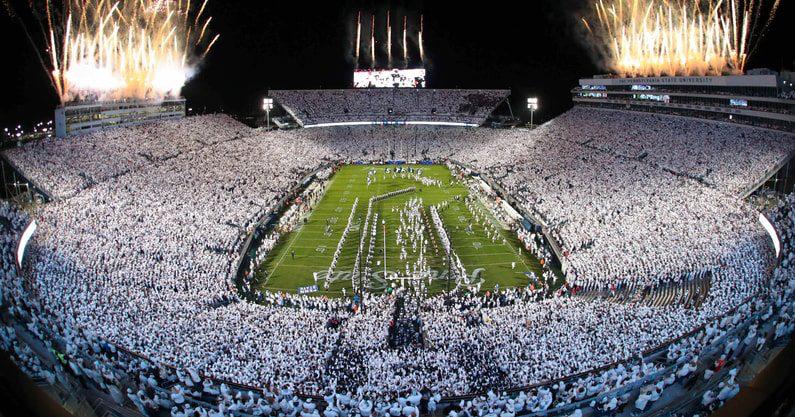
The Big Ten traces its origin to January 11, 1895, when Purdue president James H. Smart convened university leaders at Chicago's Palmer House to write rules governing intercollegiate athletics; the conference was formally established at a second meeting there on February 8, 1896. Six of the seven founding schools remain members today. Now in its third century of competition, it spans 18 member institutions across 14 states from New Jersey to the Pacific Coast, sponsoring 28 championship sports, with three schools playing football in stadiums that seat more than 100,000.
Its member institutions have won more than 600 NCAA team championships, led by historic dominance in swimming, wrestling, track and field, volleyball, and lacrosse. Iowa has won 24 national titles in wrestling, Penn State eight in women's volleyball, and Maryland and Northwestern a combined 23 in women's lacrosse.
The Olympic pipeline stands among the finest in world sport. Sixty Big Ten athletes competed at Milano Cortina 2026, representing eleven member institutions and eight nations, and returned with 37 medals including 24 gold. Eleven more served as coaches, officials, and administrators, among them the head coach of Czechia's women's hockey team.
Coupled with the Big Ten Academic Alliance, whose universities generate roughly 10 billion dollars in funded research annually, the conference remains what its founders intended: a league where academic and athletic ambition are held to the same standard.
Official Website
The Big Ten traces its origin to January 11, 1895, when Purdue president James H. Smart convened university leaders at Chicago's Palmer House to write rules governing intercollegiate athletics; the conference was formally established at a second meeting there on February 8, 1896. Six of the seven founding schools remain members today. Now in its third century of competition, it spans 18 member institutions across 14 states from New Jersey to the Pacific Coast, sponsoring 28 championship sports, with three schools playing football in stadiums that seat more than 100,000.
Its member institutions have won more than 600 NCAA team championships, led by historic dominance in swimming, wrestling, track and field, volleyball, and lacrosse. Iowa has won 24 national titles in wrestling, Penn State eight in women's volleyball, and Maryland and Northwestern a combined 23 in women's lacrosse.
The Olympic pipeline stands among the finest in world sport. Sixty Big Ten athletes competed at Milano Cortina 2026, representing eleven member institutions and eight nations, and returned with 37 medals including 24 gold. Eleven more served as coaches, officials, and administrators, among them the head coach of Czechia's women's hockey team.
Coupled with the Big Ten Academic Alliance, whose universities generate roughly 10 billion dollars in funded research annually, the conference remains what its founders intended: a league where academic and athletic ambition are held to the same standard.
Official Website
The Big Ten baseball schedule showcases a competitive landscape that is as rich in tradition as it is in talent. With a storied history and a recent expansion to 18 member institutions, the conference has solidified its presence as a powerhouse in collegiate baseball. Each spring, the Big Ten baseball teams engage in a grueling schedule, pitting some of the nation’s best programs against one another in a bid for conference supremacy.
Throughout the season, member schools compete in a structured format that includes both regular-season matchups and championship qualifications. The Big Ten baseball teams typically play a combination of conference and non-conference games, with an emphasis on rivalries that heighten the stakes. This competitive environment not only fosters team development but also enables players to showcase their skills on a national stage.
The Big Ten baseball season operates under a typical conference schedule that features a series of weekend series, where teams play against each other in a three-game format. This structure allows teams to gain valuable experience while also fighting for crucial standings within the conference. The results of these series contribute to the overall league standings, which ultimately determine postseason qualifications.
The Big Ten baseball championship is a highlight of the season, bringing together the top-performing teams for a chance to claim the conference title. This tournament format is not only a showcase of skill and strategy but also an opportunity for teams to secure their place in the NCAA tournament. With the conference's strong reputation for producing talent, the stakes are always high, and every game matters.
As the Big Ten baseball season unfolds, the competition remains fierce, with teams striving to improve their standings and make their mark on the national stage. The blend of established programs and new contenders makes for an exciting season, where every pitch can change the outcome and every game has the potential to define a team's legacy.